Some dates sit quietly in the calendar. Some detonate.
Some dates feel like something your body remembers before your mind catches up.
August 5 is like that for me.
August 5, 2019.
I was in college in Delhi when, in the Indian Parliament—miles away from my campus and far from my home, Kashmir—the special constitutional status of my land was unilaterally dismantled through the abrogation of Article 370.
The language was measured. Legal. Controlled. Everything about the days leading up to it were not.
Additional troops had been flown in. Tourists were told to leave. Pilgrims were escorted out. Something was tightening, though no one said it plainly.
And then everything stopped.
Internet cut. Phones would not ring. Political leaders were detained before they could speak. Streets emptied under curfew before people even knew what had been decided for them.
I remember the room. Not Parliament. Not the speeches. Just the room in the old building.
Five Kashmiri students. Phones on the table.
Calling home. Nothing. Calling again. Nothing.
Calling again, because what else do you do when “nothing” is the only answer you’re getting. Watching the call fail in slightly different ways each time, like the system was trying to soften the blow.
At some point, we stopped speaking in full sentences.
“Did it ring?”
“No.”
“Try again.”
And then the news.
I remember refreshing pages obsessively, as if speed could close the gap between what was happening and what we didn’t know. The news seemed to know more about our families than we did.
I don’t know when we started crying. I just remember the feeling of not being able to reach anyone, and not knowing how long that would last.
Not knowing if this was hours. Days. Something else.
And outside that room—and this is the part that doesn’t sit well even today—there was a celebration.
Firecrackers. Hashtags. Words like integration, victory, unity.
I remember thinking: how can the same moment hold this much distance?
Inside the room, it didn’t feel like anything had been won or lost. It felt like something had been removed before we even knew how to react to it.
Not debated. Not lost. Just…gone. And with it, the ability to respond.
I have tried, since then, to find language for what that felt like.
“Constitutional change” never quite holds it. “Disenfranchisement” comes close, but still feels distant.
What I come back to is this: it was not just the decision. It was the sequencing. Power moved first—quietly, completely—until response itself became impossible. Not defeated in debate. Rendered silent.
Something in me shifted that day. I didn’t have language for it then. I’m not sure I do now.
Five years later, August 5 returned. In 2024.
By then, I was working on human rights and civic space across South Asia—trying, in a more structured way, to understand moments like that one.
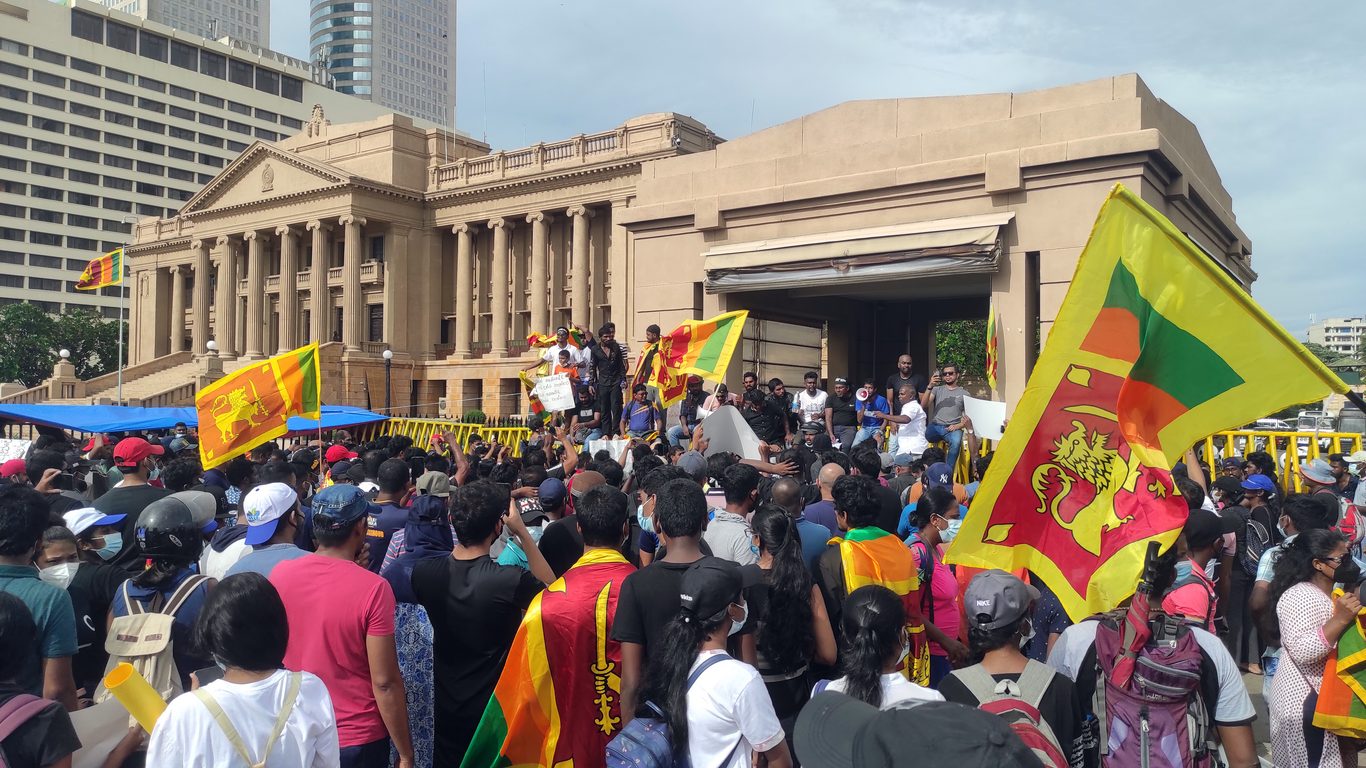
The protests in Bangladesh began in a way that felt familiar. Students. Demands. A challenge to a discriminatory quota system.
I did not have hope. Not out of cynicism exactly. Just pattern recognition.
In our region, protests rise. Then they are contained. Then they disappear—except in reports, timelines, and the small corner of the world where people like me keep track of them.
But this didn’t disappear. It only grew.
Students became crowds. Crowds became workers. Workers became a nation in the streets. The grievances widened and no longer belonged to one constituency.
And the state followed its textbook — tear gas, rubber bullets, then live ammunition. Arrests. Casualties. Deaths.
The order is always familiar. That familiarity is part of what makes it unbearable.
And yet, the streets did not thin out.
“In our region, protests rise. Then they are contained. Then they disappear—except in reports, timelines, and the small corner of the world where people like me keep track of them.”
I was covering all of this from my small room in Kashmir.
Multiple tabs open as if that would give me more control over what I was seeing. Al Jazeera on one screen. BBC on another. Protest footage looping in grainy fragments. Smoke rising over Dhaka. Livestreams cutting mid-breath.
And then that image.
Abu Sayed. Standing there. Arms open. Not running.
I didn’t know what to do with that image. I still don’t.
Something is unsettling about watching a protest in real time from a place where protest has been made impossible. Like your body remembers one reality, but your eyes are watching another.
I kept thinking: this is what it looks like when people are still allowed to gather. And then: what does it mean that I’m watching this from here?
I don’t think I understood what was happening to me then. Only that something felt… reversed.
In 2019, I had been inside the rupture but cut off from it. In 2024, I was outside the rupture but unable to look away. It felt like too much and not enough at the same time.
August 5 came again that year. But that year, I was already inside something else. Everything in Bangladesh was unfolding so quickly, so intensely, that I didn’t know where to place my own August 5.
For a moment, it felt like I had forgotten it. Or maybe not forgotten—just displaced. Or buried it under something that demanded my attention more urgently. I’m not sure.
Everything in Bangladesh was accelerating. Crowds pushing forward. Rumors collapsing into confirmation.
Sheikh Hasina had fled the country.
I remember screaming in disbelief.
Not because I understood what it meant. But because it didn’t fit into the patterns I had learned to expect.
How was this even possible? How did people stay long enough, together enough, to actually shift the power?
I kept waiting for an explanation that would make it feel less improbable. But it didn’t come.
Ather Zia once wrote, “No sugar in my tea, there’s sweetness in knowing that empires crumble.” That day, I had tea without sugar.
But sweetness is never simple.
“Ather Zia once wrote, ‘No sugar in my tea, there’s sweetness in knowing that empires crumble.’ That day, I had tea without sugar. But sweetness is never simple.”
A year later, in 2025, I was in Dhaka.
Sitting in rooms with people who had been on those streets.
We spoke about things that don’t make it into headlines. Fear. Funerals. The sound of bullets. The moment when you decide whether to run. Or not.
I asked one student why he kept going.
He said: “When the bullets rained, two people stayed back — the injured and the one taking care of them. The rest marched forward. That’s when I knew we had to march forward. There was only a future if we marched forward.”
And something about that logic—it hasn’t left me. Not because it’s hopeful. But because it’s so matter-of-fact. Survival and movement had to coexist.
I keep returning to those two Augusts.
2019: five of us in a room, unable to reach anyone, while the world outside seemed to move on—or celebrate.
2024: people in the streets who refused to leave, even when leaving might have meant safety.
I don’t think the difference is optimism.
Or courage, at least not in the way we usually use that word.
It feels more physical than that. Like presence. Like people staying long enough that absence becomes harder to enforce.
As a researcher, I measure civic space. I count things. Incidents. Laws. Violations. But none of that captures what I felt in 2019—that closing in, where speech does not just get restricted, it begins to feel pointless, as if there is nowhere for it to go.
Bangladesh did not erase that. It complicated it. It made it harder to believe that closure is inevitable. Which leaves me with questions I don’t know how to answer.
Why there?
Why then?
Why not elsewhere?
What happens when silence is arranged so completely that people cannot respond?
And what happens when, somehow, people refuse that arrangement?
Not in theory. Not in analysis. But in the body. In the moment.
In the decision to stay. Or to leave. Or to call again, even when you already know it won’t go through.
“What happens when silence is arranged so completely that people cannot respond? And what happens when, somehow, people refuse that arrangement? Not in theory. Not in analysis. But in the body. In the moment.”
Bangladesh also stayed with me in another way. Not because a government fell—but because of what didn’t immediately change after.
The interim government—or now the BNP government—did not suddenly resolve what had brought people to the streets. The anxieties are still there. The inequalities did not disappear. The uncertainty lingered, just in a different form.
And I find myself sitting with that discomfort.
Sometimes, even asking a question I don’t know how to sit with: was it worth it? So many deaths. So much risk. And still, so much that remains unresolved.
Uprisings move quickly. They gather, they surge, they rupture something open. But what comes after does not move like that. It is quieter. Slower. Less visible.
It looks like institutions that don’t transform overnight. Like accountability that takes time to even begin. Like the long, uneven work of making power answer to people who had to first force it to listen.
And I’m still trying to understand what we are meant to do with that gap—between the moment everything shifts, and the long stretch where things are supposed to change.
I remember saying this out loud once, almost in frustration.
And someone who had been doing this work far longer than me said, very gently: Muda, democracy is hard work.
You cannot fit a movement neatly into whether it worked or not.
The question is simpler. And harder. Are people’s lives—even slightly—better?
I didn’t have an answer then. I’m not sure I do now. But I keep noticing things. Small things.
Two days ago, an activist who had been exiled from Bangladesh for over fifteen years took a flight back home. Back to his country. His village. His people.
I have worked with him for a while. And when I saw his message—that he was going back—I smiled.
Perhaps this is how the needle moves.
“You cannot fit a movement neatly into whether it worked or not. The question is simpler. And harder. Are people’s lives – even slightly – better?”