Art show
Collective Power, Collective Peace
For this issue, we asked peacebuilders and creatives to share their visual response to the question: what does collective power — and collective peace — look like to you? In this digital art show, we feature seven works from around the world, representing diverse contexts and ways of seeing.
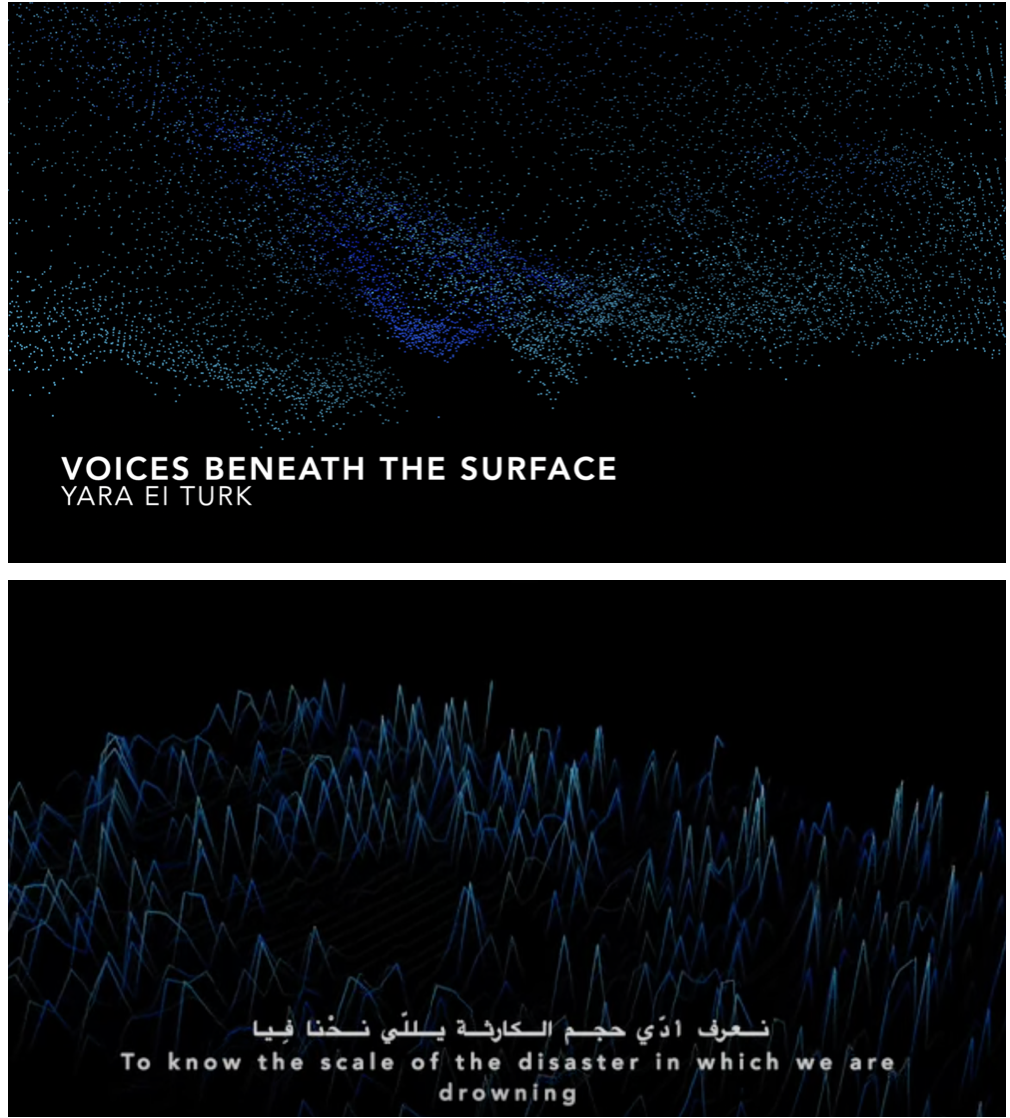
Voices beneath the surface
Yara El Turk | Lebanon
Voices Beneath the Surface (2021) brought together youth from different sectarian backgrounds, and survivors of the Beirut port explosion. Using water as a metaphor for displacement and memory, participants co-created collages and recorded testimonies. They shaped the work, owned the process, and decided together how their stories would be told. Collective peace is not given. It is made when strangers become collaborators, when silence becomes speech, and when communities stop talking about each other and start creating with each other.
Shakilla | Afghanistan
I am Shakilla, a high school graduate from Afghanistan with a strong desire to continue my education, especially in the field of data science and technology. Alongside my academic goals, I am an artist who uses embroidery as a powerful way to express meaningful ideas.
Through my work, I create carefully stitched images that carry deep messages. In the past, Afghan women embroidered colorful flowers and designed beautiful clothing, but today many of us are limited to wearing black. That is why I chose this art to express the reality of Afghan women and share their voices.
Each piece I create reflects emotion, identity, and resistance, sending a message to the world about the strength and struggles of Afghan women.
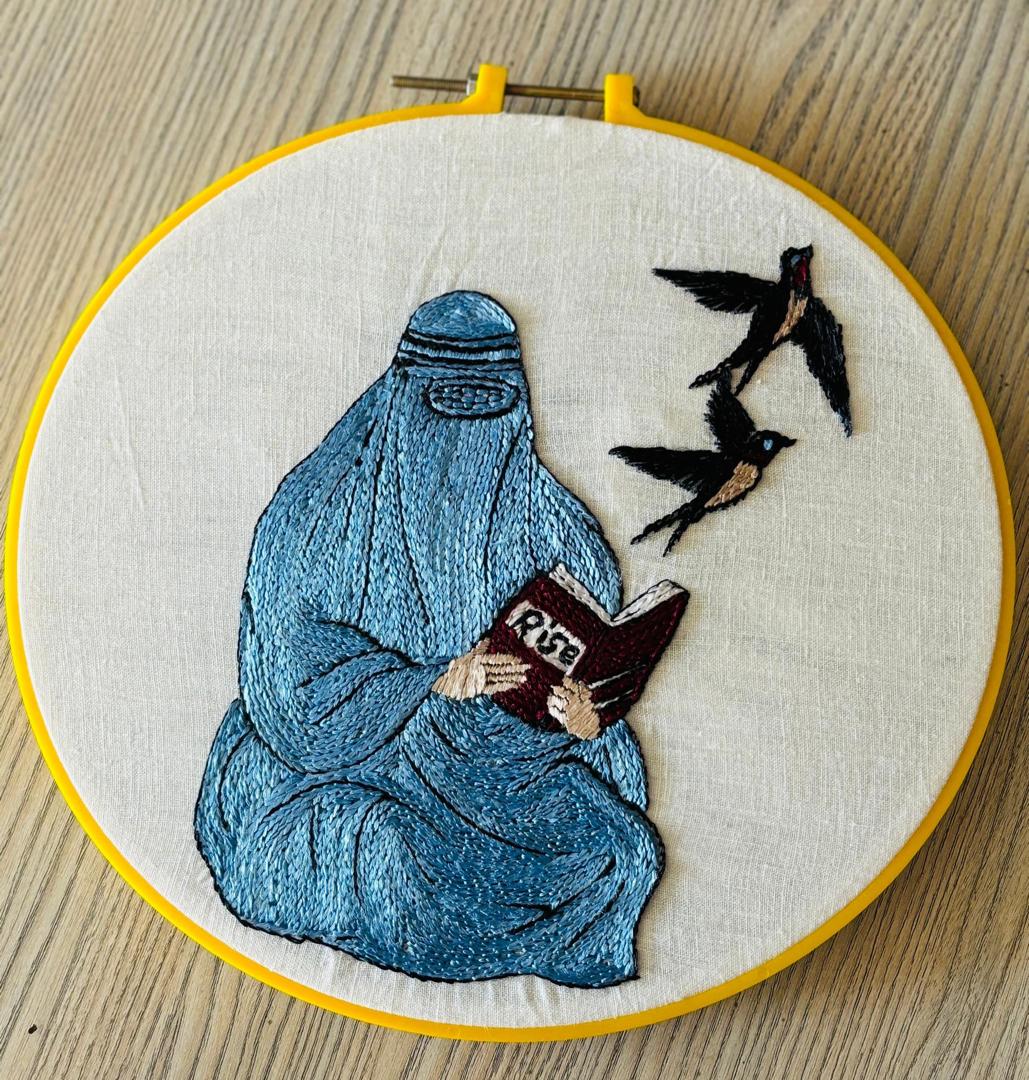
Rise from silence
A woman wears a blue burqa(چادری), covering her entirely, reading a book titled “Rise.” Two swallows fly out from the book, symbolizing freedom. The burqa represents restriction and violence her country (Afghanistan), but through knowledge, she finds hope and the courage to rise. This piece shows how learning can set the spirit free, even in the hardest circumstances, even if she is denied the right to study she is trying to learn.
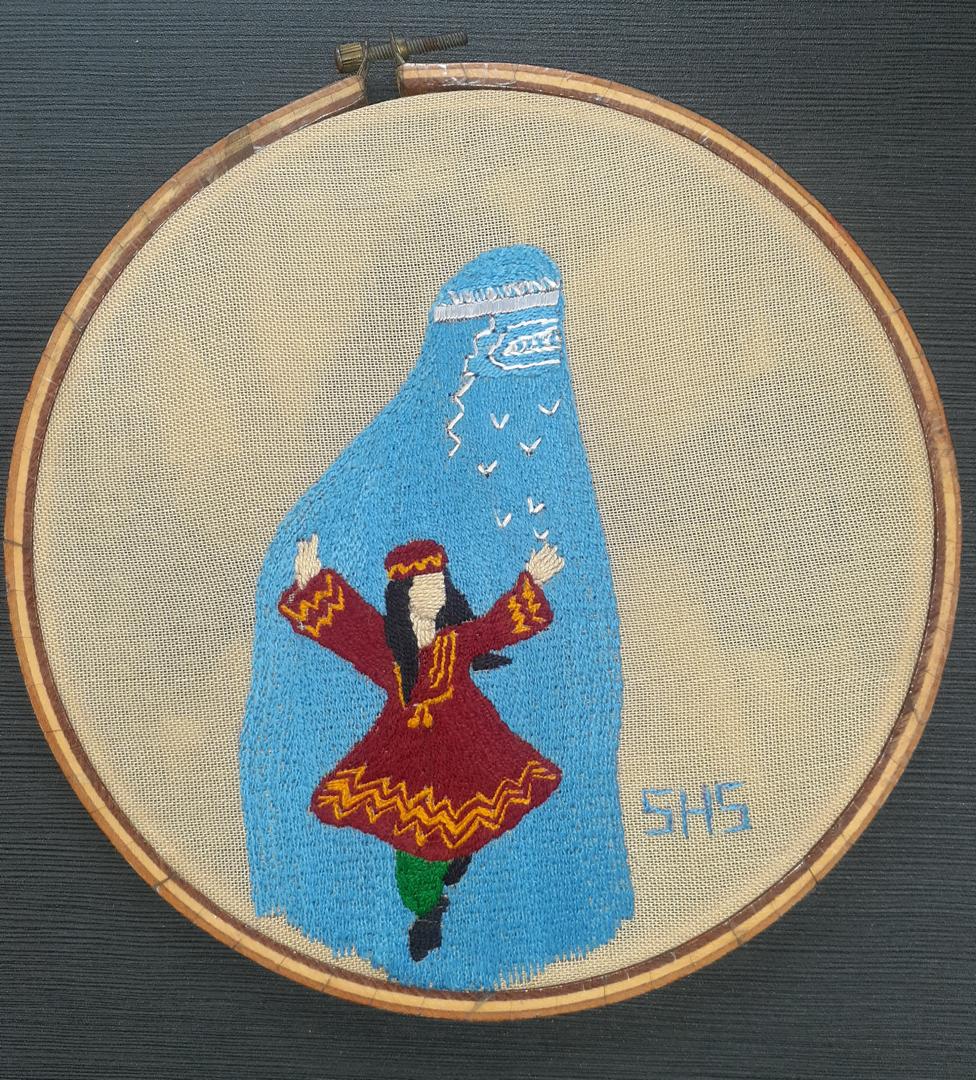
Dance of Hope
A woman in a burqa forms the background, symbolizing restriction and fear in my country (Afghanistan). In front, a young girl in red traditional Afghan clothes dances freely. The girl’s movement and bright dress represent life, joy, and hope for the future. This embroidery celebrates courage, culture, and the resilience of Afghan girls despite oppression.
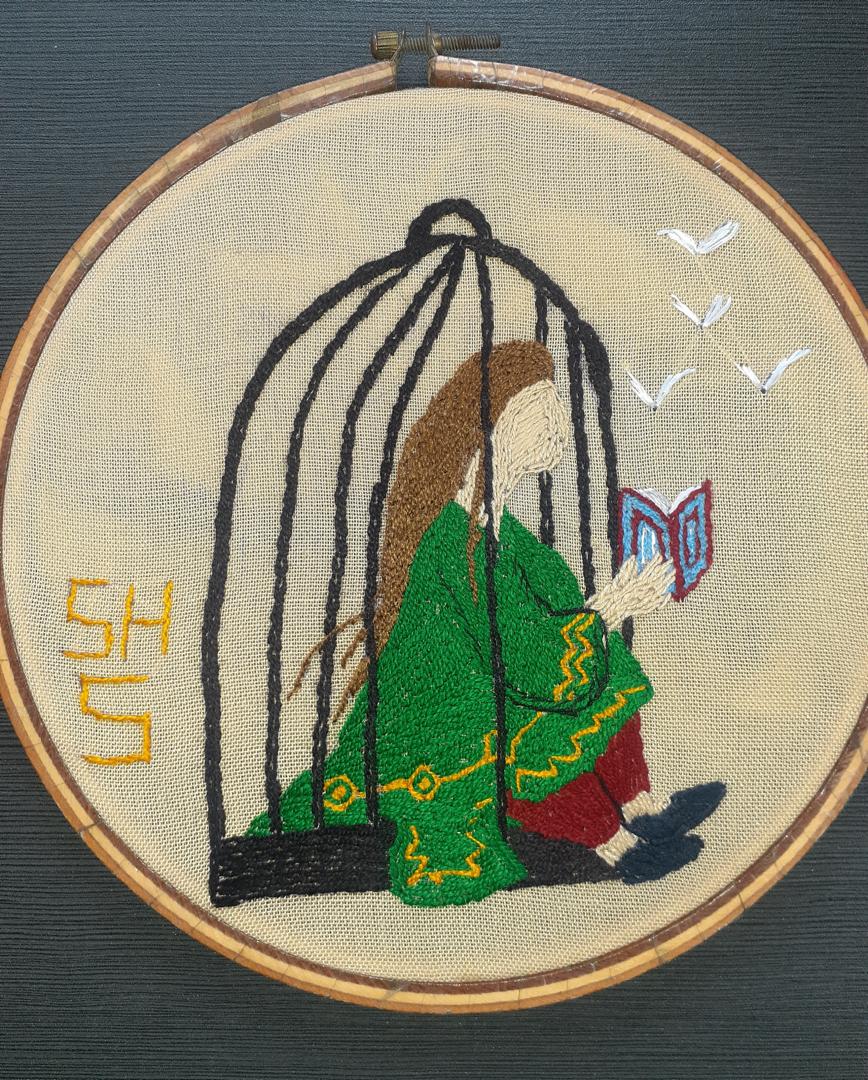
Flight from captivity
A woman in green traditional Afghan clothes sits inside a black cage, reading a book. Birds fly out of the cage, symbolizing freedom from confinement. The cage represents violence and restrictions, but knowledge gives her wings. This work shows the power of learning and imagination to overcome oppression. She is me — still learning inside a cage (Afghanistan under Taliban rule).
Pow
graham farmer | uk
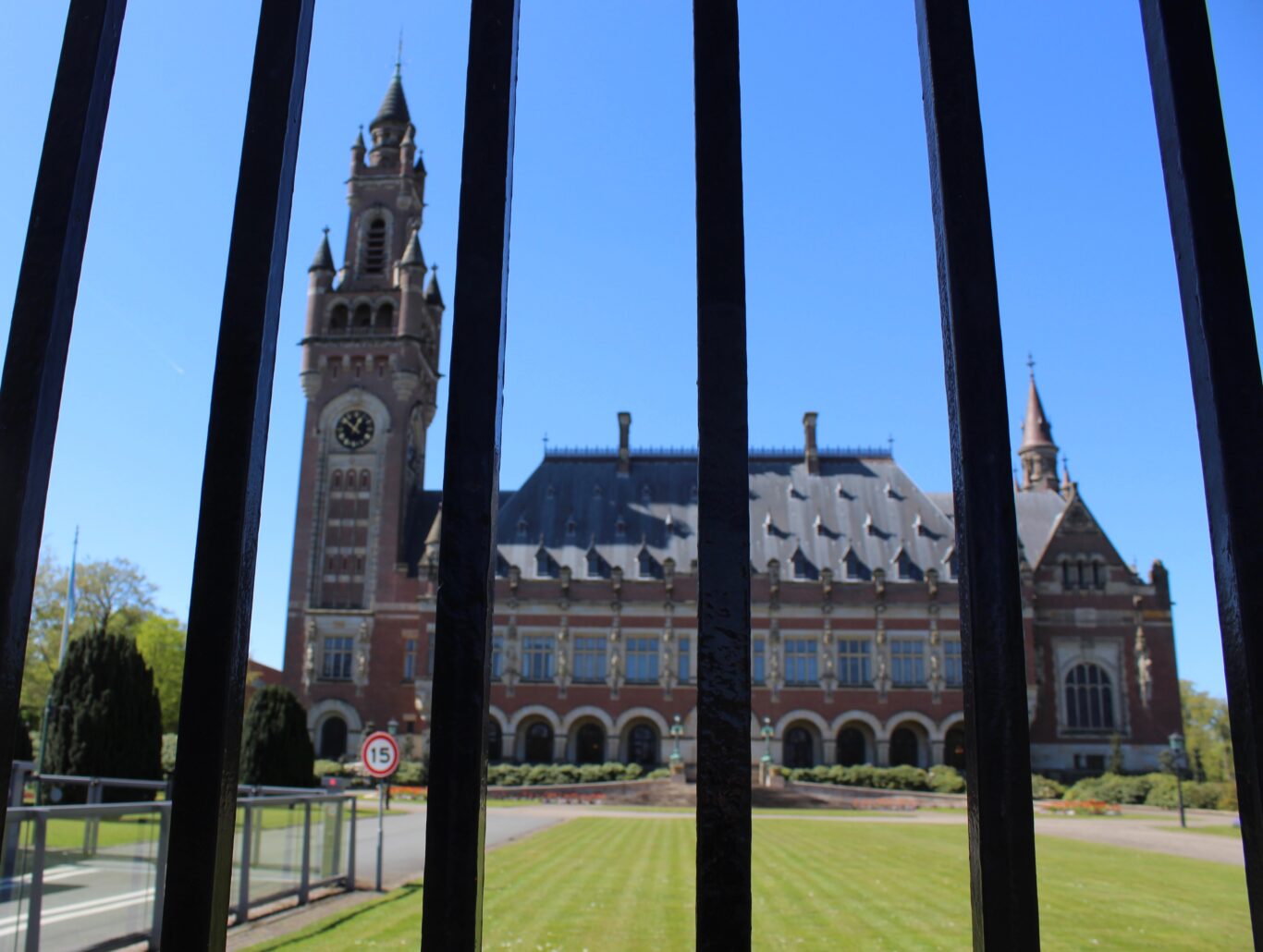
This image taken outside the Carnegie Peace Palace on 2026 World Earth Day, articulates a view that people are still prisoners of war regardless of peace and international law. This insight is acutely demonstrated by millions of people of all nationalities systematically bearing the true cost of an unlawful conflict in Iran. The acumen builds on my ‘Positive Peace’ studies via the Institute of Economics & Peace which, marks the start of an audacious bid to create the first day of world peace in human history. The futility of the mission, however, is crystal clear. Despite the all the diplomacy, celebrity influence and $billions donated, the UN has systematically failed to achieve a single day of world peace in eighty years – a lifespan. Indeed, greater minds have debated the issue endlessly only to discover that war is natural and world peace impossible. But where there’s a will, there are rays of light, glimmers of hope and an enlightening force to challenge any situation.
Collective power, collective peace
Zara Sattar Khan | Class 3 | Pakistan
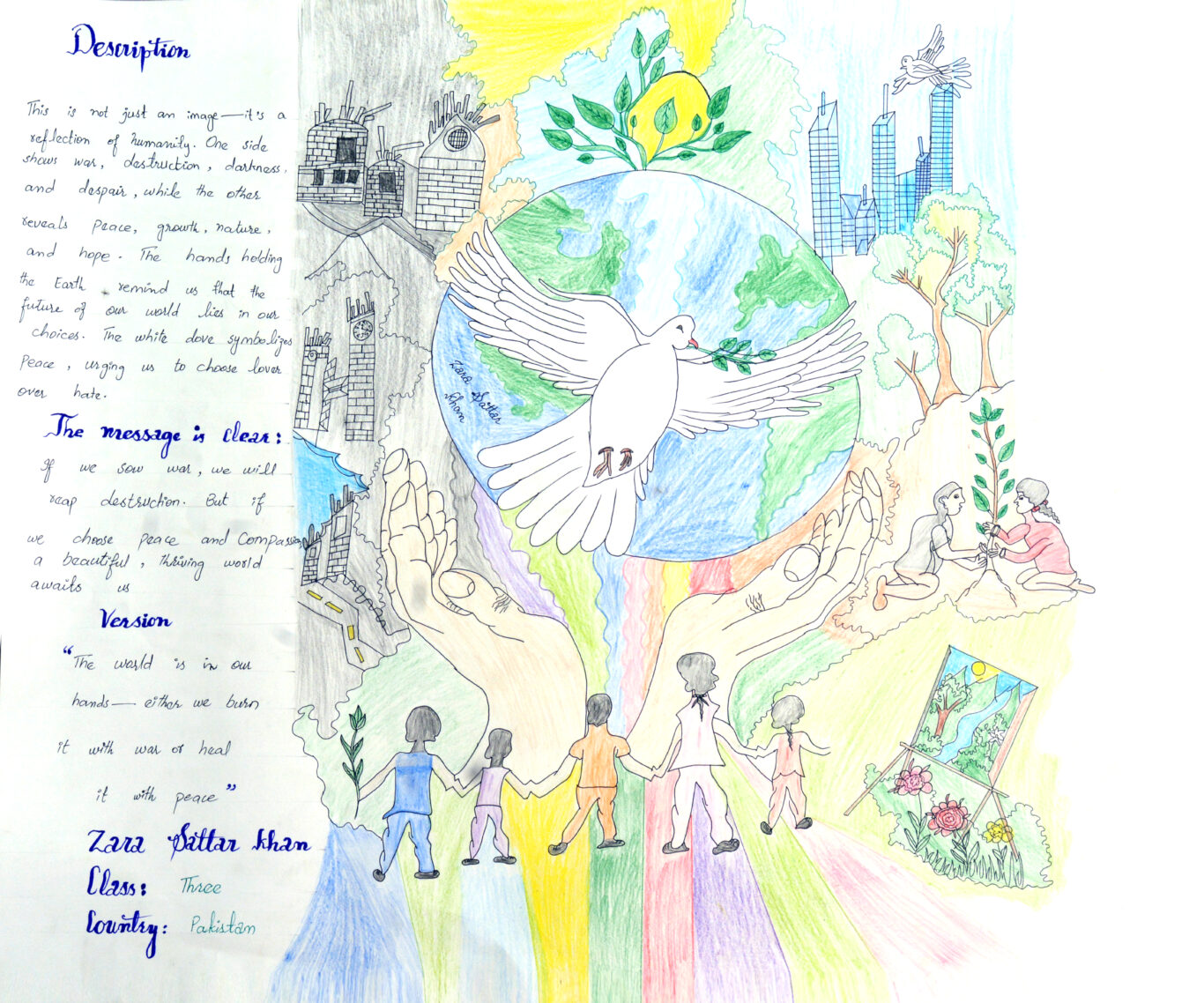
This artwork reflects the strength that grows when people stand together with unity and compassion. In a world often divided by differences, collective power becomes a source of healing, understanding, and peace. Each element in the piece represents voices joining as one—breaking barriers, building trust, and creating hope. Peace is not achieved alone; it is shaped through shared responsibility, respect, and love. This work invites viewers to see beyond individuality and embrace the beauty of togetherness, where harmony becomes possible and a brighter future can be created for all.
Description: This is not just an image – it’s a reflection of humanity. One side shows war, destruction, darkness, and despair, while the other reveals peace, growth, nature, and hope. The hands holding the Earth remind us that the future of our world lies in our choices. The white dove symbolizes peace, urging us to choose love over hate.
The message is clear: If we sow war, we will reap destruction. But if we choose peace and compassion, a beautiful, thriving world awaits us.
Version: “The world is in our hands – either we burn it with war or heal it with peace.”
Teaching Nonviolence Starts with Our Children
Valerie Venegas | United States
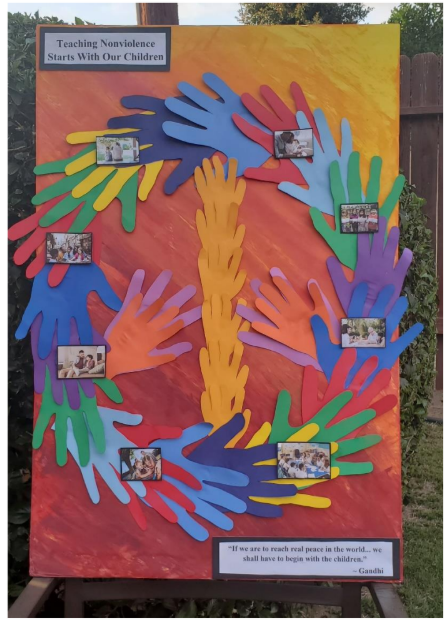
I choose to create an art piece as my Vivid Share. It started with the background colors of the sunset. I asked each member of our family from grandparents, parents, aunt, uncles and children to participate. There were 13 family members that contributed. I traced their right hands and asked them their favorite colors to help create my peace sign. This way everyone felt they had some ownership to what was being created. The hands around the outside of the peace sign are the adults. In the middle are my three grandchildren. The small pictures in the peace signs are families of all ethnicities having conversations about nonviolence. These conversations can take place anywhere… at dinner, family meeting, in a park or on a walk. Sometimes teaching nonviolence is done in schools with group discussions and projects, through group counseling or in youth training. As a grandparent I feel a responsible to make sure that my grandchildren learn these valuable skills now. It is Gandhi that said, “If we are to reach real peace in the world… we shall have to begin with the children.”
Collective power, collective peace
Kiplangat Ngetich | Kenya
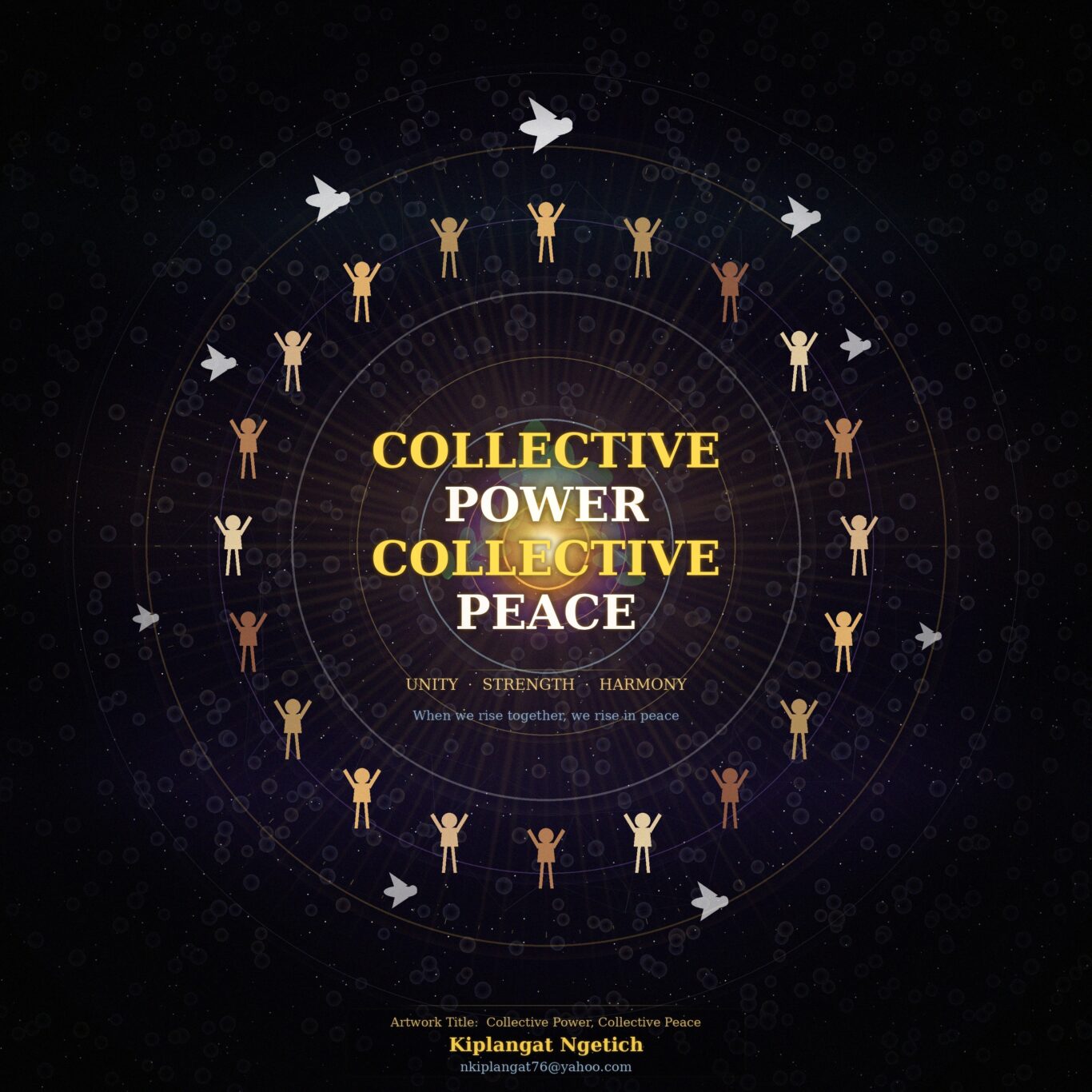
“When we rise together, we rise in peace”
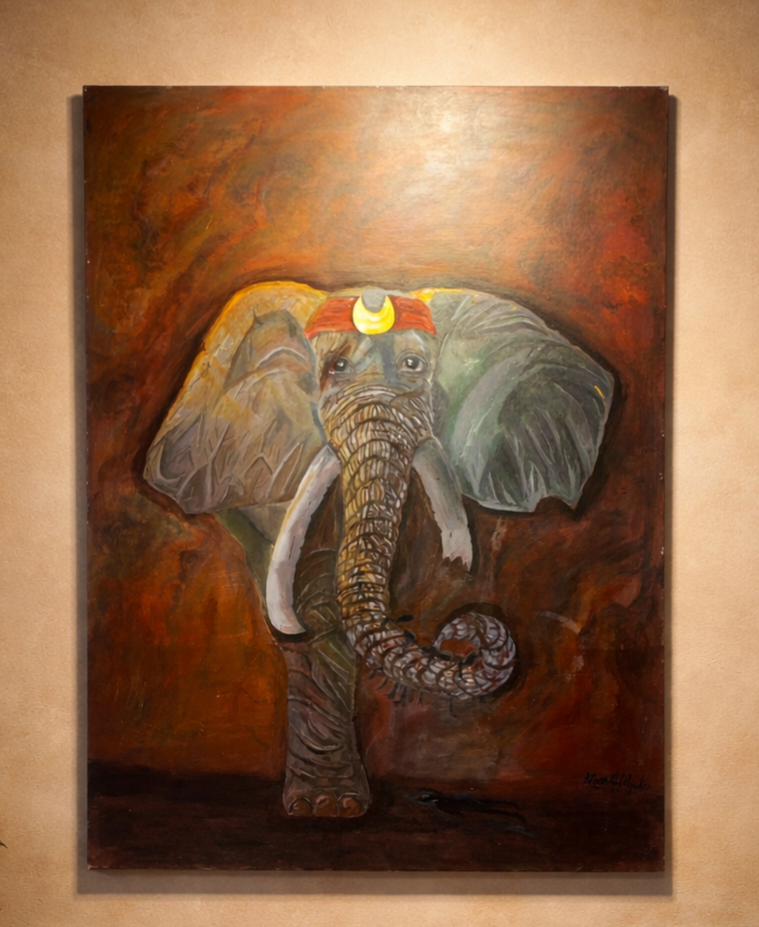
the elephant
Noon Abdalgader | Sudan
This painting reflects the war in Sudan through the image of a strong and resilient elephant standing firmly despite the pain and destruction around it. The elephant is not just an animal here; it symbolizes Sudan itself — powerful, proud, and unbreakable no matter how difficult the circumstances become.
The “Gamar Boba” symbol on the elephant’s head represents Sudanese identity, heritage, and deep cultural roots, appearing like a small light shining through the darkness of war. The dark colors and fiery background express suffering, fear, and loss, while the elephant’s forward stance symbolizes resilience, hope, and perseverance.